Martin Parr’s documentary photography was never meant to make viewers comfortable. His saturated colours, aggressive ring flash, and unflinching close-ups of British leisure—sunburned holidaymakers at decaying seaside resorts, garish consumer goods, half-eaten food—provoked accusations of cruelty and exploitation. Critics called The Last Resort (1983-1985) “a clammy, claustrophobic nightmare world.” Philip Jones Griffiths dismissed Parr’s work as “fascistic.” His 1994 admission to Magnum Photos passed by a single ballot—the narrowest margin in the agency’s history—with Henri Cartier-Bresson famously declaring him “an alien from another planet.”
Yet Parr’s ironic distance and satirical observations fundamentally changed what documentary photography could be. His willingness to use colour, flash, and humour to examine consumerism, class, and the absurdity of everyday life opened doors for subsequent generations. By the time he served as Magnum president (2013-2017), the photographer once considered too controversial had become instrumental in modernising the agency and championing diverse voices.
Today’s documentary photographers have inherited the expanded possibilities Parr fought for, yet many work in directions that deliberately depart from his approach. Where Parr maintained observational distance, contemporary practitioners embrace collaboration. Where he employed ironic detachment, they offer empathetic warmth. Where he captured public behaviours, they explore personal trauma. The following photographers—both established masters and emerging voices—reveal how documentary photography has evolved not merely from Parr’s influence, but often in conscious opposition to his model, privileging intimacy over irony, participation over observation, and emotional explicitness over satirical ambiguity.
Alec Soth (American, b. 1969) received the critical embrace that eluded Parr for decades. Where Parr’s 1994 Magnum admission passed by a single ballot amid accusations of cruelty, Soth’s Sleeping by the Mississippi (2004) earned immediate comparisons to Walker Evans and Robert Frank, with Anne Wilkes Tucker placing it “exactly within the tradition” of documentary masters. Critics praised Soth’s work with terms like “poetry,” “intimacy,” and “melancholy”—language never applied to Parr. Both use deliberate techniques—Soth’s large-format 8x10 camera, Parr’s ring flash—but to opposite ends. Soth’s contemplative portraits of Mississippi River “loners and dreamers” convey “gentle humour and tenderness”; Parr’s flash heightens artificiality for satirical observation. The contrast reveals documentary’s evolution: Soth’s vulnerability was celebrated; Parr’s satirical ambiguity was condemned. alecsoth.com
Nan Goldin (American, b. 1953) represents the ultimate insider perspective against which Parr’s outsider observation stands in stark relief. The Ballad of Sexual Dependency (1985/1986), her visual diary of New York’s Lower East Side, post-Stonewall gay subculture, and heroin scene, “remains a benchmark for all other work in a similar confessional vein.” Goldin explicitly photographs “my party, my family, my history”—documenting intimacy, love, violence, and AIDS from within her own community. Where Parr observes strangers from detached distance, Goldin is “deeply entwined with her subjects,” capturing “lovemaking, violence, addiction, hospitalization” with snapshot immediacy. Both use flash prominently, but Goldin’s direct flash creates visceral intimacy within her community while Parr’s ring flash produces artificial saturation for satirical effect. She was celebrated for confessional authenticity; he was criticised for exploitative distance, revealing documentary’s shift toward first-person narrative that places photographers within rather than outside the frame. nangoldan.weebly.com
Bruce Gilden (American, b. 1946) shares Parr’s aggressive flash technique but deploys it through confrontational street encounters rather than ironic observation. Both faced ethical criticism—Joel Meyerowitz called Gilden “a fucking bully” for his in-your-face approach, while Philip Jones Griffiths dismissed Parr’s work as “fascistic”—yet their methods differ fundamentally. Gilden works New York City streets with “flash in one hand and jumping at people,” using off-camera flash to create noir-style separation isolating individual “characters” and “underdogs.” Parr uses ring flash at British beaches and resorts, heightening artificial color saturation for satirical effect. Where Gilden’s confrontation is physical and personal, Parr’s aggression is observational and satirical. Their 2019 Sofa Sessions conversation at the Martin Parr Foundation revealed mutual admiration between two controversial Magnum photographers who revolutionised documentary through innovative flash work, proving the technique’s range from Gilden’s noir-drama to Parr’s heightened-satire. brusegilden.com
Cristina de Middel (Spanish, b. 1975) embodies the institutional transformation Parr both suffered from and later enabled. Parr’s 1994 Magnum admission passed by a single ballot—the narrowest margin in the agency’s history—with Henri Cartier-Bresson calling him “an alien from another planet.” Twenty-three years later, de Middel’s The Afronauts (2012) was discovered at Arles by Parr himself, who championed her work and launched her international career. She became Magnum president in 2022, her first year of full membership. Where Parr’s “truthful” satirical documentation of real consumer culture was condemned as cruel, de Middel’s explicit questioning of documentary truth through staged reconstructions was received as innovative. The Afronauts deliberately blurs “boundaries between illusion and reality” using fictional narratives—the opposite of Parr’s unflinching observation. Their documented friendship illustrates the paradox: Parr revolutionized documentary and opened Magnum’s doors, yet the photographer once considered too different became the champion of work fundamentally opposing his observational model. www.lademiddel.com
Susan Meiselas (American, b. 1948) represents deeply engaged, collaborative documentary practice built on long-term relationships with subjects. Her Nicaragua (1981) and Kurdistan: In the Shadow of History (1997) combine photography with subjects’ own voices through audio interviews and testimonials, directly contrasting Parr’s observational distance. Where Parr maintains ironic detachment, Meiselas constantly interrogates power relations and centres participants’ agency in how they’re represented. Her MacArthur Fellowship and 2019 Deutsche Börse Photography Foundation Prize recognise work that prioritises ethical collaboration over satirical observation. susanmeiselas.com
Lee-Ann Olwage (South African) practices collaborative storytelling emphasising “photography as celebration” and co-creation with subjects. Her World Press Photo Story of the Year 2024 winner Valim-babena, documenting dementia care in Madagascar, was praised for images “composed with warmth and tenderness” that portray subjects “with dignity and care.” This empathetic, participatory approach directly departs from Parr’s ironic distance, representing contemporary documentary’s shift toward celebrating rather than critiquing subjects, and privileging emotional warmth over satirical ambiguity. leeannolwage.com
Zied Ben Romdhane (Tunisian, b. 1981), Magnum’s newest full member as of 2025, creates dreamlike imagery exploring malaise among Tunisian youth. His World Press Photo-winning The Escape uses colour expressively with “poetic aesthetics that evoke an emotional response,” employing melancholic contemplation rather than satirical observation. Where Parr uses saturated colour to create heightened, artificial reality and ironic commentary, Ben Romdhane deploys colour for mood and intimate psychological exploration, representing documentary’s evolution toward personal, emotionally-invested narrative over external observation. ziedbenromdhane.net
Myriam Boulos (Lebanese, b. 1992), a Magnum Associate, practices diaristic first-person documentary inspired by Nan Goldin and Daido Moriyama. Her What’s Ours (2023) documents Lebanese revolution and personal life with “startling energy and intimacy,” using direct flash to capture texture and bodies as “powerful motif, both visceral and vulnerable.” While both Boulos and Parr employ flash prominently, Boulos works at extreme proximity within her own community to create raw intimacy, whereas Parr maintains observer distance to achieve artificial saturation. Her approach exemplifies documentary’s shift toward photographers placing themselves within rather than outside the frame. www.magnumphotos.com
Salih Basheer (Sudanese, b. 1995) represents voices from underrepresented regions entering elite institutions. His 22 Days in Between (2023)—the first photobook by a Sudanese photographer, winning Les Rencontres d’Arles Photo-Text Book Award—combines photography with personal writing, self-portraits, family archives, and children’s drawings to explore trauma and memory. Where Parr documents public social behaviours captured in present moments, Basheer creates hybrid, multimedia narratives reconstructing personal past and processing trauma, representing documentary’s expansion into deeply introspective, memory-based storytelling far removed from Parr’s observational model. www.salihbasheer.com
Julia Kochetova (Ukrainian, b. 1993) won World Press Photo’s Open Format Award 2024 for War Is Personal, combining photography with poetry, audio, electronic music, and illustration in an interactive web-based experience. Her “firsthand storytelling” from inside the Russian-Ukrainian war uses multimedia to “inject more emotion and symbolism than photographs might convey on their own.” While Parr innovated documentary through colour, flash, and satire within traditional formats, Kochetova transcends single-frame photography entirely, creating immersive, first-person, multimedia experiences that represent documentary’s evolution into digital, interactive, emotionally explicit territories beyond Parr’s ironic photographic observations. juliakochetova.rocks
Lúa Ribeira (Spanish, b. 1986, based Bristol), a full Magnum member since 2023, represents the institutional transformation Parr enabled through his Foundation work. Based in Bristol where Parr established the Martin Parr Foundation in 2017, Ribeira has collaborated with the Foundation on multiple projects including leading the St Pauls Carnival photography initiative alongside Parr himself. Her practice, characterised by collaborative immersion with marginalised communities and deliberately “imperfect” images that resist conventional composition, departs from Parr’s observational satire. Where Parr documents consumer leisure from detached distance, Ribeira creates “encounters that establish relationships and question structural separations”—photographing Spanish youth culture, Galician women with disabilities, and migrants crossing to Europe through collaborative engagement. Her rapid Magnum ascent (nominee 2018, full member 2023) in Bristol’s photography ecosystem illustrates how Parr’s institutional legacy opened doors for practitioners whose empathetic, participatory methods fundamentally oppose his ironic distance. luaribeira.com
Martin Parr’s death in December 2025 closed a chapter on one of documentary photography’s most transformative careers. The photographer once dismissed as “fascistic” and admitted to Magnum by a single ballot became the agency’s president, championing voices like Cristina de Middel who work in fundamental opposition to his observational model. This paradox defines his legacy: Parr revolutionised documentary photography through saturated colour, aggressive flash, and satirical distance, yet the generation he empowered through institutional leadership has decisively moved toward empathy over irony, collaboration over observation, and first-person narrative over detached critique. Where Parr maintained ironic ambiguity about British consumer culture, today’s practitioners foreground emotional explicitness; Meiselas’s collaborative ethics, Goldin’s confessional intimacy, Boulos’s diaristic urgency, Olwage’s celebratory warmth. The doors Parr fought to open, both through his controversial entry and his modernising presidency, now admit photographers whose participatory, multimedia, emotionally-invested approaches represent not his aesthetic continuation but documentary’s conscious departure from the model that made their inclusion possible. His greatest achievement may be this: he changed what documentary could be, then ensured the institution would welcome those who imagined it differently.
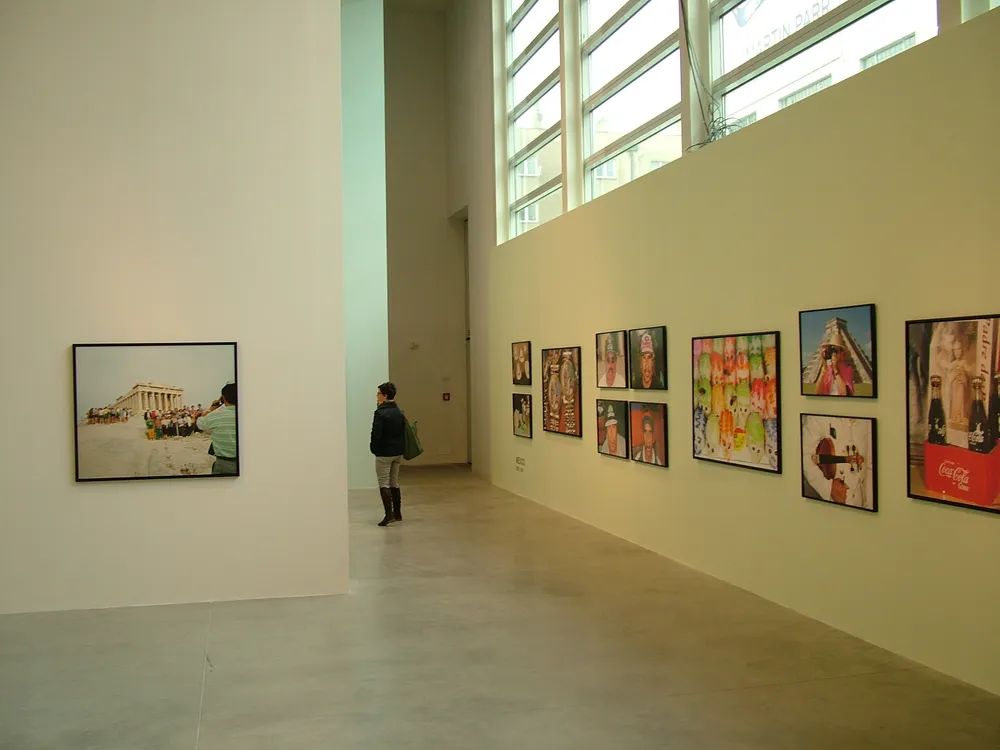
Photograph: “Martin Parr DOX Prague-2” by Jindřich Nosek (NoJin), CC BY-SA 4.0